
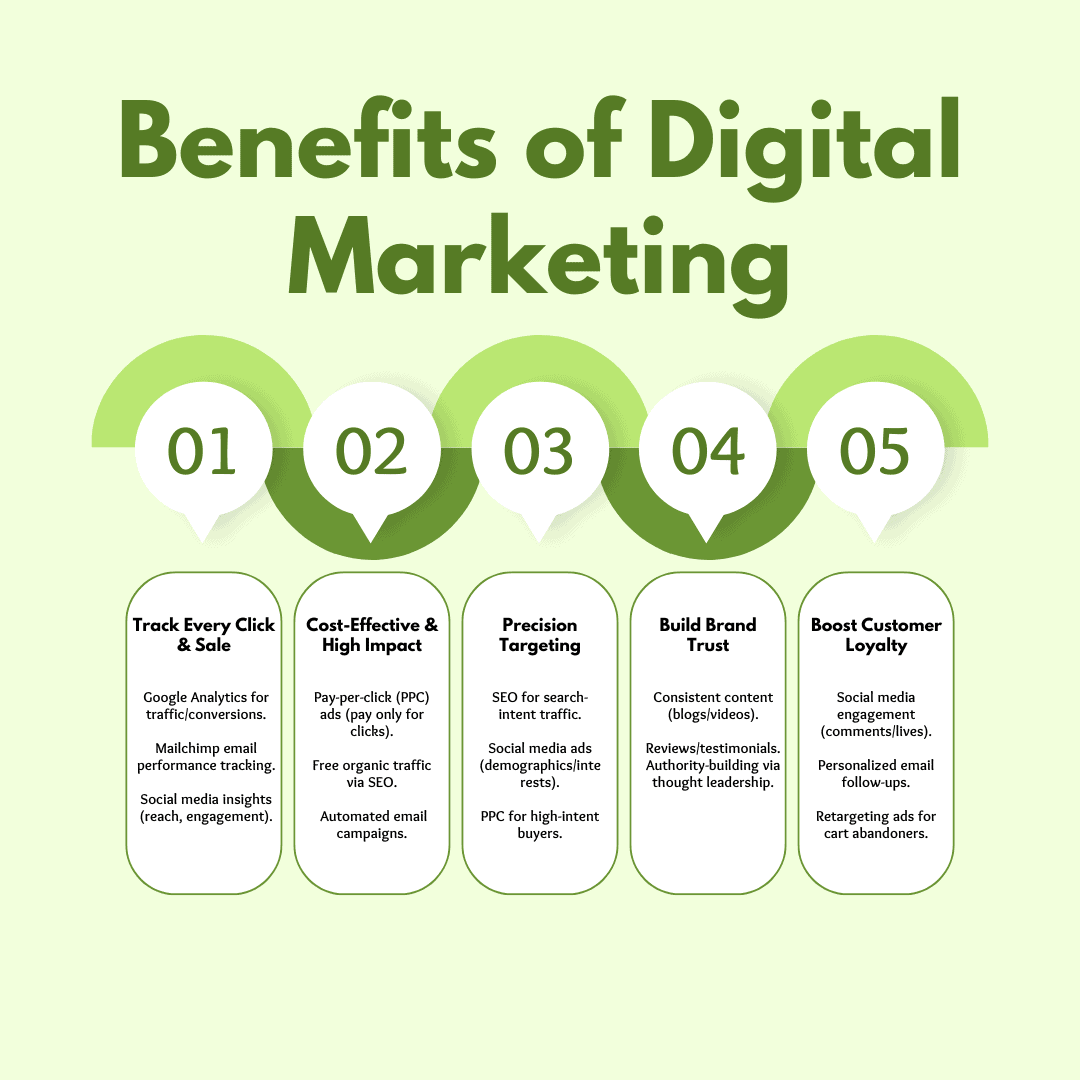
The Benefits of Digital Marketing for Businesses
Digital marketing has changed how businesses reach customers, build awareness and grow. From search engines and social media to email and online advertising, digital channels give organisations practical ways to connect with people where they spend much of their time: online.
Whether a business is a local start-up or an established organisation, a well-planned digital marketing strategy can support its wider goals. Here are some of the key benefits.
Reach the right audience
Traditional advertising can put a message in front of a broad audience, but it may be difficult to know how many people are genuinely interested. Digital marketing makes it possible to focus campaigns on particular audiences, using factors such as location, interests, search behaviour or previous interactions with a business.
More relevant communication can help a business make better use of its marketing budget and connect with potential customers who are more likely to be interested in its products or services.
Build visibility online
Customers often use search engines, social platforms and online directories to find information before making a decision. A clear, useful online presence can help a business appear during this research and make a positive first impression.
Search engine optimisation (SEO), helpful website content and an active social media presence can all contribute to greater visibility. These activities usually require consistent effort, but they can help people discover a business over time.
Measure performance more clearly
One of the main advantages of digital marketing is the ability to track activity. Depending on the channel and tools used, businesses can monitor website visits, enquiries, email engagement, advert clicks and other useful measures.
This information can show which campaigns are attracting attention and where customers may be dropping off. Results can then inform future decisions, helping businesses refine their messages, audiences and budgets. Measurement does not guarantee success, but it makes it easier to learn and adapt.
Make changes quickly
Digital campaigns can often be updated more quickly than traditional marketing materials. If an advert is not performing as expected, its audience, wording or creative content may be adjusted. A website page can also be improved as customer needs or business priorities change.
This flexibility is particularly useful in fast-moving markets, where timely information and relevant offers can make a difference.
Support customer relationships
Digital marketing is not only about attracting new customers. Email newsletters, social media updates and useful website content can help businesses stay in touch with existing audiences.
Regular, relevant communication can keep customers informed about new services, useful advice or important updates. The emphasis should be on providing value rather than sending frequent messages for their own sake. Clear permission and careful handling of personal information are essential.
Compete at different scales
Online channels give smaller businesses opportunities to reach customers beyond their immediate surroundings, while still allowing them to focus on a local area. A well-maintained website, a relevant local search presence and targeted campaigns can help smaller organisations compete for attention alongside larger brands.
Results depend on the market, the quality of the offer and the strategy used. Digital marketing is not a substitute for a strong product or good customer service, but it can help more people find out about them.
Use budgets strategically
Digital marketing includes a wide range of options, from organic content and SEO to paid search and social advertising. Businesses can choose channels that suit their objectives and resources, then review performance to decide where further investment may be worthwhile.
Some activities, such as building an audience through useful content, take time. Paid campaigns can generate visibility sooner, but require ongoing budget and careful management. The most appropriate mix depends on the business, its audience and its goals.
Reach customers across devices
People may discover a business on a mobile phone, research it on a laptop and return later to make an enquiry. A joined-up digital presence helps make these interactions easier. A mobile-friendly website, consistent information and clear next steps can create a more convenient experience across devices and channels.
Getting started with digital marketing
Effective digital marketing begins with clear objectives. A business might aim to increase relevant website visits, generate more qualified enquiries, improve repeat purchases or build awareness in a particular area. These goals help guide channel choices and make it easier to assess progress.
It is also important to understand the intended audience, create useful and accurate content, and review performance regularly. Rather than trying every channel at once, businesses can start with the options most closely connected to their objectives and expand as they learn.
Conclusion
Digital marketing can help businesses improve visibility, reach relevant audiences, measure activity and develop stronger customer relationships. Its greatest value comes from using the right channels with a clear purpose, useful content and a willingness to learn from results.
9 Key Benefits of Digital Marketing for Your Business
- Reach more customers through online channels.
- Target audiences with greater precision.
- Track campaign performance in real time.
- Adjust budgets quickly to improve results.
- Build stronger relationships with customers.
- Increase brand visibility across platforms.
- Generate leads around the clock.
- Personalise messages for different audiences.
- Measure return on investment more clearly.
Reach more customers through online channels.
Online channels such as search engines, social media, email and websites can help your business reach more customers, wherever they are. By sharing useful content and choosing platforms that suit your audience, you can introduce your products or services to people beyond your usual network. Targeted campaigns can also help you focus on customers by location, interests or needs, making it easier to connect with the right people and build lasting relationships.
Target audiences with greater precision.
Digital marketing enables businesses to target audiences with greater precision by tailoring campaigns to factors such as location, interests, demographics and online behaviour. This helps ensure messages reach people who are more likely to find a product or service relevant, rather than being shown to a broad, less interested audience. With careful targeting and regular review, businesses can make better use of their marketing budget and create more engaging customer experiences.
Track campaign performance in real time.
Tracking campaign performance in real time helps you see what’s working while your marketing is still running. Monitor useful measures such as clicks, website visits, enquiries and conversions, then use those insights to adjust your message, audience or budget where needed. Regular checks can help you respond quickly, make better-informed decisions and get more value from your digital marketing spend.
Adjust budgets quickly to improve results.
Digital marketing makes it easier to adjust budgets as campaign results come in. If an advert or channel is delivering strong engagement and valuable enquiries, you can consider allocating more of your budget to it; if performance is weak, you can reduce spend, test a different approach or redirect funds elsewhere. Review results regularly and make changes based on reliable data, while allowing enough time for campaigns to perform and avoiding decisions based on short-term fluctuations alone.
Build stronger relationships with customers.
Digital marketing helps businesses build stronger relationships with customers through timely, relevant and two-way communication. Email updates, social media conversations and useful online content can keep customers informed, answer their questions and show that their feedback matters. By sharing information that genuinely helps rather than simply promoting products, businesses can build trust, encourage loyalty and create more positive experiences over time.
Increase brand visibility across platforms.
Increasing brand visibility across platforms helps your business stay recognisable wherever customers spend time online. A consistent presence across your website, search engines, social media and email can make it easier for people to discover your brand and remember what it offers. Keep your messaging, visual identity and tone of voice aligned, while adapting content to suit each platform. This creates a more cohesive experience and helps build familiarity and trust over time.
Generate leads around the clock.
Digital marketing can help your business generate leads around the clock, even when your team is offline. A well-optimised website, useful content and clear calls to action can guide potential customers towards making an enquiry at any time of day. By combining these with tools such as online forms, booking systems or automated email responses, you can capture interest and follow up efficiently—while ensuring every interaction feels helpful and relevant.
Personalise messages for different audiences.
Personalising messages for different audiences helps make digital marketing more relevant and engaging. Consider what each group cares about, the questions they may have and where they are in their customer journey, then tailor the content, tone and offer accordingly. A new prospect may need a helpful introduction, while an existing customer may value product advice or a loyalty offer. Use audience data responsibly, respect privacy preferences and avoid assumptions, so each message feels useful rather than intrusive.
Measure return on investment more clearly.
Digital marketing can make it easier to understand how marketing spend contributes to business results. By tracking measures such as website visits, enquiries, sales and campaign costs, businesses can compare outcomes with investment and identify which activities are delivering value. These insights support more informed decisions about where to focus future budgets. Because results can be influenced by factors beyond a single campaign, it is important to choose relevant measures and assess them over an appropriate period.
Leave a Reply