
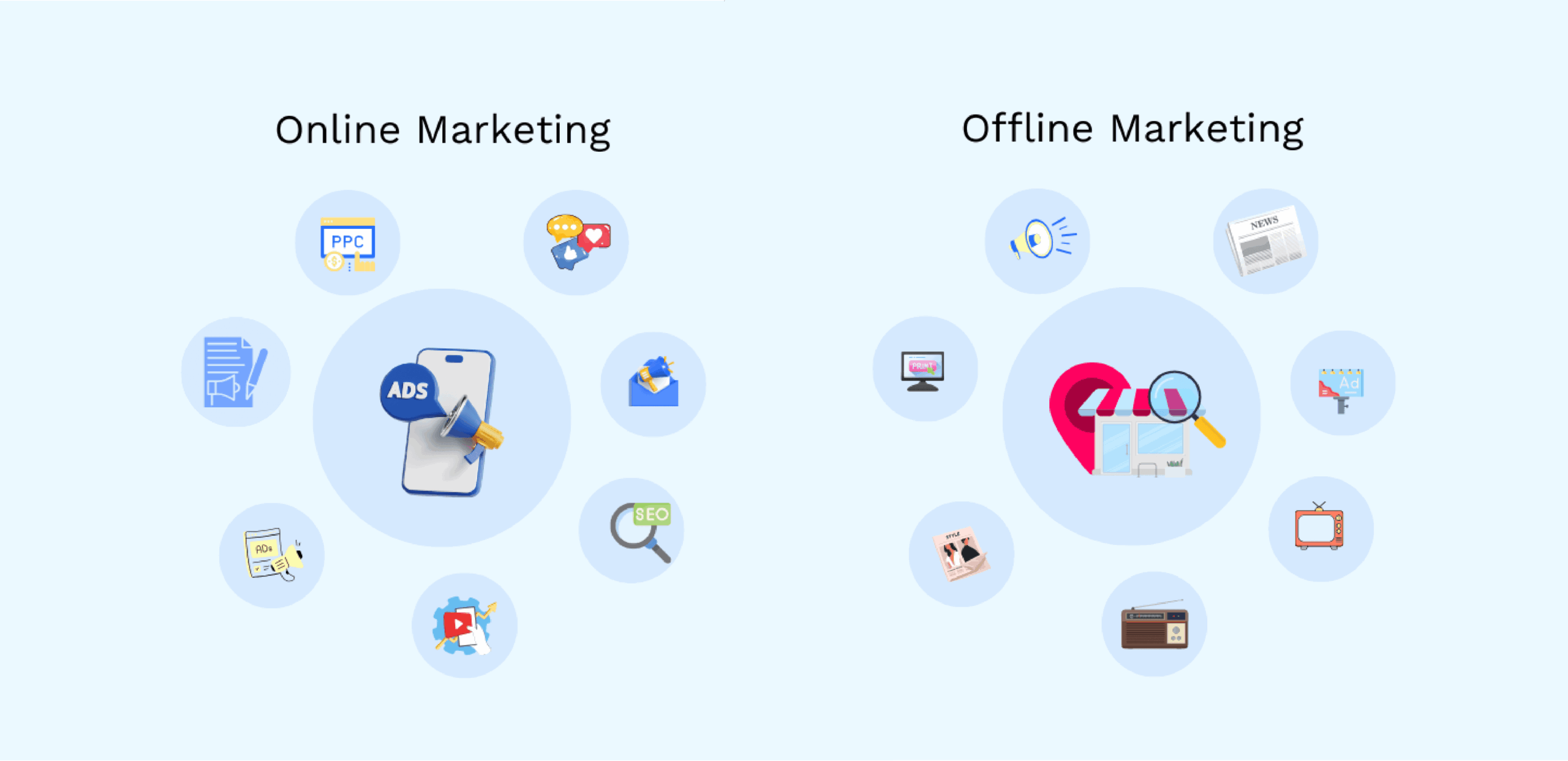
Offline to Online Marketing: Connecting Every Customer Touchpoint
Offline and online marketing are often treated as separate activities. In practice, customers move between the two all the time. Someone might see a poster on the way to work, search for the business on their phone, read reviews and then visit a shop or make an enquiry online.
Offline-to-online marketing connects these experiences. It uses traditional channels to encourage digital action, while online activity can reinforce recognition and interest in the real world. When the two work together, your marketing becomes easier to recognise, measure and act on.
What is offline-to-online marketing?
Offline-to-online marketing is the use of physical or traditional channels to guide people towards a digital destination. These channels might include print adverts, direct mail, packaging, events, outdoor advertising, radio or in-store displays. The digital destination could be a website, landing page, social media profile, online booking form or email sign-up.
It also works in the other direction. Online campaigns can encourage people to visit a shop, attend an event, use a printed voucher or speak to a member of staff. The aim is not to favour one channel over another, but to make the journey between them straightforward.
Why bring offline and online marketing together?
- Reach customers in more places: Different people notice different channels. A coordinated approach gives your business more opportunities to be seen.
- Make campaigns more memorable: Repeating a consistent message across print, digital and in-person experiences can strengthen brand recognition.
- Encourage a clear next step: A poster can direct people to a booking page; a product package can invite them to view a demonstration.
- Learn what is working: Digital links, QR codes and campaign-specific web pages can help you understand which offline activity prompts online engagement.
- Support the full customer journey: Customers can discover your business offline, research it online and choose how they want to buy or get in touch.
Practical ways to connect offline and online channels
Use QR codes with a purpose
A QR code can take someone directly from a printed advert, menu, leaflet or display to a relevant online page. Make sure the destination is useful and mobile-friendly. It might contain event details, a product guide, a booking form or a special offer. Add a short instruction, such as “Scan to book” or “Scan to see the full range”, so people know what to expect.
Create campaign-specific landing pages
Rather than sending everyone to your homepage, direct them to a page designed for the campaign they have seen. A dedicated page can carry the same wording and imagery as the offline advert, provide relevant information and make the next action clear. It can also help you distinguish campaign visits from other website traffic.
Include trackable links and contact details
Custom web addresses, campaign codes and unique phone numbers can help show which channels are generating enquiries. For example, a leaflet could use a specific offer code, while a radio campaign could direct listeners to a memorable page on your website. Keep these details simple enough to remember and use.
Bring digital content into physical spaces
In-store screens, event displays and printed materials can promote online resources such as video demonstrations, customer stories, product information or email updates. The digital content should add value, rather than simply repeat what is already in front of the customer.
Use online channels to extend real-world activity
Promote an event through your website and social media, then share highlights afterwards. If customers visit a shop or attend a demonstration, make it easy for them to find your online channels, ask questions or sign up for relevant updates. Always explain what people are signing up for and respect their preferences.
Keep the experience consistent
Customers should be able to recognise your business as they move between channels. Use consistent branding, tone of voice and key messages across advertisements, landing pages, social media and in-person materials. The content does not need to be identical everywhere, but it should feel connected.
Check that each step works in practice. Test QR codes, links and forms on mobile devices. Make sure pages load quickly, contact information is current and any promotion has clear terms. A broken link or confusing offer can undermine an otherwise strong campaign.
Measure results and improve
Set a clear objective before launching a campaign. You might want to increase bookings, generate enquiries, encourage event registrations or grow newsletter subscriptions. Choose measures that relate to that objective, such as visits to a campaign page, completed forms, redeemed offer codes or sales associated with a particular activity.
Use analytics responsibly and be transparent about how personal information is collected and used. Not every result can be attributed perfectly to one channel, so combine digital data with customer feedback and sales information where appropriate. Ask customers how they heard about your business, and look for patterns over time.
Start with a simple plan
- Choose a specific audience and campaign goal.
- Select an offline channel that is likely to reach that audience.
- Decide on one useful online destination and one clear call to action.
- Make the branding and message consistent across both channels.
- Test every link, code and form before the campaign goes live.
- Review the results and use what you learn to improve the next campaign.
Make every interaction count
Offline-to-online marketing is not about adding a QR code to every piece of print. It is about understanding how people discover, assess and choose your business, then making each transition feel natural. With a clear purpose, consistent messaging and thoughtful measurement, offline and online marketing can support one another and create a smoother experience for customers.
5 Tips to Connect Your Offline and Online Marketing
- Use QR codes on print to link to useful online content.
- Keep branding consistent across shops, leaflets and social media.
- Promote your website and social channels in-store.
- Use online adverts to reach people near your physical locations.
- Track which offline campaigns drive website visits or sales.
Use QR codes on print to link to useful online content.
Add QR codes to printed materials such as leaflets, posters, menus and product packaging to give people quick access to useful online content. Link to a relevant page, such as a booking form, product guide, video demonstration or event details, rather than simply sending visitors to your homepage. Include a brief prompt explaining what they’ll find, and test the code on different mobile devices before printing.
Keep branding consistent across shops, leaflets and social media.
Keep your branding consistent across shops, leaflets and social media so customers can recognise your business wherever they encounter it. Use the same logo, colours, fonts and tone of voice, while adapting the content to suit each channel. This creates a coherent experience, builds familiarity and makes it easier for customers to connect what they see in person with your online presence.
Promote your website and social channels in-store.
Promote your website and social media channels throughout your store so customers can stay connected after their visit. Add your web address to receipts, packaging and displays, and use clear signs to invite people to follow your social accounts for useful updates, product news or special offers. Give them a good reason to connect, and make any QR codes easy to scan on a mobile phone.
Use online adverts to reach people near your physical locations.
Use online adverts to reach people near your physical locations by targeting users within a practical distance of your shop, venue or service area. Promote a relevant offer, event or reason to visit, and make it easy for people to take the next step with clear directions, opening hours or a booking link. Keep the advert and landing page consistent, and track actions such as map clicks, calls or in-store redemptions to understand what is working.
Track which offline campaigns drive website visits or sales.
Track which offline campaigns lead to website visits or sales by giving each one a clear, measurable identifier. Use unique QR codes, short web addresses, discount codes or campaign-specific landing pages on different adverts, leaflets or event materials. Then review visits, enquiries and purchases linked to each identifier to see what is working best. This makes it easier to focus your budget on the offline activity that delivers results and improve future campaigns.
Leave a Reply