
Salesforce Digital Marketing: A Guide to Connected Customer Engagement
Salesforce digital marketing brings customer data, marketing campaigns and sales activity together in one ecosystem. Instead of treating email, advertising, websites and customer service as separate channels, businesses can use Salesforce tools to build a more connected view of each customer and deliver communications that are more relevant.
For organisations looking to improve personalisation and measure campaign performance, Salesforce can provide a foundation for planning, automating and analysing digital marketing. The right approach depends on a business’s goals, existing systems, audience and the Salesforce products it uses.
What is Salesforce digital marketing?
Salesforce digital marketing describes the use of Salesforce platforms and integrations to plan and deliver marketing across digital channels. Depending on the products in place, this may include email, mobile messaging, advertising, web content, customer data and campaign analytics.
A key idea is connecting marketing activity with customer information. A campaign can be informed by a person’s preferences, previous interactions or stage in the customer journey, subject to appropriate permissions and data protection requirements. Marketing teams can then assess how their work contributes to engagement, enquiries and sales.
Key Salesforce marketing capabilities
Campaign automation
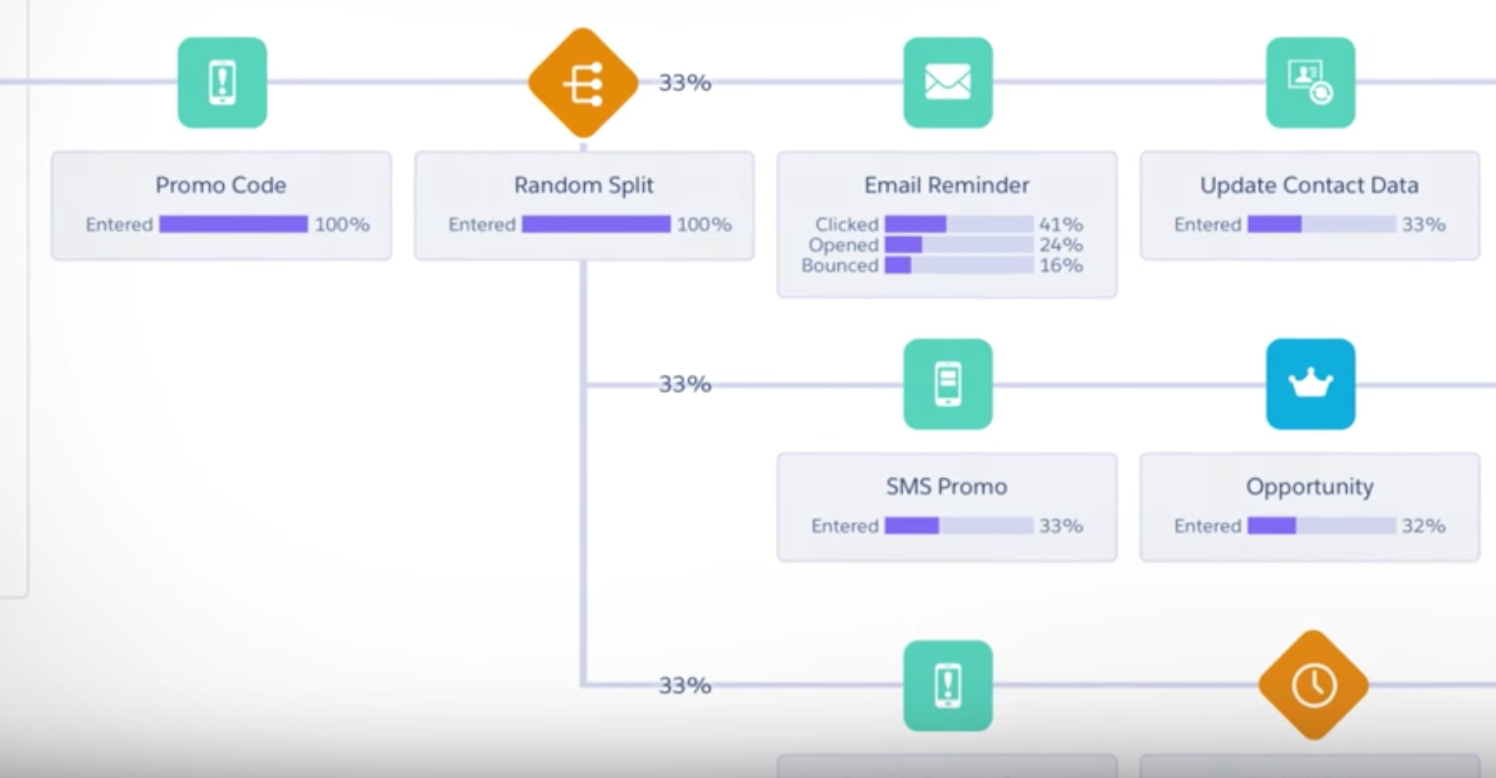
Marketing automation can help teams send communications in response to customer actions or defined criteria. For example, a business might welcome a new subscriber, follow up after an event or share information with a prospect who has requested a guide. Automated journeys can reduce repetitive work while helping customers receive timely communications.
Email and mobile marketing
Email remains an important channel for newsletters, product updates and nurture campaigns. Salesforce marketing tools can support audience segmentation, personalisation and automated sends. Depending on the solution and configuration, businesses may also coordinate mobile communications, such as SMS or push notifications.
Successful messaging starts with a clear purpose and useful content. Frequency, relevance and consent all matter: a technically sophisticated campaign will not build trust if it sends unwanted or poorly targeted messages.
Customer data and segmentation
Customer data can help marketers group audiences according to relevant characteristics and interactions. Segments might be based on stated preferences, previous purchases or engagement with a campaign. Salesforce products can help bring data together, but the quality of the results depends on the accuracy, consistency and lawful use of that data.
Before building complex segments, it is worth reviewing how information is collected, where it is stored and whether records are maintained consistently across systems.
Personalised customer journeys
Journey-based marketing coordinates communications over time rather than relying on a single campaign. A journey might begin when someone subscribes, then adapt according to their responses or preferences. This can help businesses make communications feel more relevant across different stages of the customer relationship.
Personalisation does not have to mean using every available data point. Often, a small number of accurate, useful details can support a better experience than an overly complicated approach.
Reporting and measurement
Marketing reports can help teams understand how campaigns are performing and where improvements may be needed. Common measures include delivery, engagement, conversions and revenue contribution. The most useful measures are those connected to business objectives, rather than metrics that look impressive but do not inform decisions.
Clear measurement also depends on sound tracking and agreed definitions. Teams should decide what counts as a conversion, how attribution will be assessed and how results will be compared across channels.
Benefits of using Salesforce for digital marketing
- A more connected customer view: Linking marketing activity with other customer information can help teams understand interactions across the relationship.
- Greater efficiency: Automation can reduce manual tasks and support consistent follow-up.
- More relevant communications: Segmentation and journey design can help tailor messages to audience needs and preferences.
- Improved collaboration: Shared information can help marketing, sales and service teams work towards common goals.
- More informed decisions: Reporting can give teams a clearer view of campaign outcomes and opportunities to improve.
How to build a Salesforce digital marketing strategy
- Set clear objectives. Decide what marketing needs to achieve, such as generating qualified enquiries, improving retention or increasing repeat purchases.
- Map the customer journey. Identify key interactions, questions and potential barriers from first contact through to ongoing engagement.
- Review your data. Check data quality, permissions, ownership and how information moves between Salesforce and other systems.
- Choose the right channels. Focus on the channels your audience uses and your team can manage effectively.
- Start with a manageable campaign. A focused welcome series or lead-nurture journey can be a practical way to test processes before expanding.
- Measure and refine. Review results against the original objectives, gather feedback and make evidence-based changes.
Common challenges to consider
Salesforce can support sophisticated marketing, but technology alone will not guarantee better results. Common challenges include fragmented or inaccurate data, unclear campaign ownership, overly complex automation and limited integration with other platforms. Poorly planned personalisation can also feel intrusive rather than helpful.
Businesses should pay particular attention to data protection. In the UK, marketing activity must comply with applicable privacy and electronic communications rules. Organisations should understand their lawful basis, respect marketing preferences, provide clear privacy information and manage consent where required. Specialist legal advice may be appropriate for complex requirements.
It is also important to plan for training and ongoing maintenance. Marketing journeys, integrations and reports need regular review as products, customer expectations and business processes change.
Is Salesforce digital marketing right for your business?
Salesforce digital marketing may be a good fit for businesses that need to coordinate campaigns across channels, connect marketing with sales and service activity, or manage complex customer journeys. Smaller teams may benefit too, provided the solution is proportionate to their needs and there is a clear plan for implementation and day-to-day management.
The best results come from combining suitable technology with useful content, reliable data and a customer-first strategy. By starting with clear goals and improving campaigns over time, businesses can use Salesforce to create more consistent, measurable and relevant digital marketing experiences.
Maximising Marketing Success: 7 Advantages of Salesforce Digital Marketing
- Connects marketing with customer data.
- Supports personalised campaigns.
- Automates repetitive marketing tasks.
- Coordinates campaigns across channels.
- Helps teams segment audiences.
- Tracks campaign performance.
- Encourages collaboration between teams.
Challenges of Implementing Salesforce Digital Marketing: Costs, Complexity, and Personalisation Concerns
- Can be expensive to implement and maintain.
- Requires staff training and specialist expertise.
- Setup and customisation can be complex.
- Poor data quality can undermine campaign results.
- Integrations may need ongoing technical support.
- Over-automation can make messages feel impersonal.
Connects marketing with customer data.
Salesforce digital marketing connects marketing activity with customer data, giving teams a clearer view of people’s preferences, interactions and history. With accurate, appropriately managed information, marketers can create more relevant audience segments and tailor communications to customers’ needs. This can support a more consistent experience across channels and help teams make better-informed campaign decisions.
Supports personalised campaigns.
Salesforce digital marketing supports personalised campaigns by helping businesses use customer preferences, past interactions and purchase history to shape more relevant communications. Marketers can segment audiences and tailor messages, offers and content to different needs or stages of the customer journey. When personalisation is based on accurate data and handled with appropriate permissions, it can make campaigns feel more useful to customers and encourage stronger engagement.
Automates repetitive marketing tasks.
Salesforce digital marketing can automate repetitive tasks such as sending welcome emails, assigning leads and following up after a customer interaction. By setting up workflows and customer journeys in advance, marketing teams can spend less time on routine administration and more time planning campaigns, creating useful content and improving the customer experience. Automation also helps ensure communications are sent consistently and at the right time, while giving teams the flexibility to review and refine their approach.
Coordinates campaigns across channels.
Salesforce digital marketing helps businesses coordinate campaigns across channels, including email, mobile, social media and digital advertising. By bringing campaign activity and customer information together, teams can deliver more consistent messages, tailor communications to different audiences and manage each interaction as part of a connected customer journey.
Helps teams segment audiences.
Salesforce digital marketing helps teams segment audiences using relevant customer information, such as preferences, previous interactions and purchase history. This makes it easier to tailor campaigns to different groups, ensuring people receive content that is more useful to them. With well-maintained data and thoughtful targeting, teams can create more relevant communications and build stronger customer relationships.
Tracks campaign performance.
Salesforce digital marketing helps businesses track campaign performance in one place, making it easier to see how audiences respond across channels. Marketers can monitor relevant measures such as email engagement, website visits, enquiries and conversions, then compare results with campaign objectives. These insights help identify what is working, where improvements are needed and how to make better-informed decisions about future marketing activity.
Encourages collaboration between teams.
Salesforce digital marketing encourages collaboration between marketing, sales and customer service teams by bringing relevant customer information and campaign activity into a shared environment. With a clearer view of customer interactions, teams can coordinate follow-ups, share insights and provide more consistent communications. This helps reduce information silos and supports a smoother customer experience across the entire journey.
Can be expensive to implement and maintain.
One potential drawback of Salesforce digital marketing is the cost of implementation and ongoing maintenance. Expenses can include licences, setup, data migration, integrations, staff training and specialist support. As a business’s requirements grow, additional features or customisation may increase the total cost further. Careful planning can help organisations choose the capabilities they need and ensure the investment is proportionate to the value they expect to gain.
Requires staff training and specialist expertise.
A potential drawback of Salesforce digital marketing is that it can require staff training and specialist expertise. Teams need to understand the platform’s features, data structures and automation tools to use them effectively, while more complex integrations and customer journeys may require support from experienced administrators or consultants. This can add to implementation costs and make it harder for businesses to get full value from the system without ongoing training and technical support.
Setup and customisation can be complex.
A potential drawback of Salesforce digital marketing is that setup and customisation can be complex. Configuring the platform to suit a business’s processes may require specialist expertise, careful planning and significant time, particularly when integrating existing systems or building automated customer journeys. Without clear requirements and appropriate training, teams may find the platform difficult to manage, so it is important to consider the ongoing support and resources needed before implementation.
Poor data quality can undermine campaign results.
Poor data quality can undermine Salesforce digital marketing campaigns by leading to inaccurate audience segments, irrelevant personalisation and messages being sent to the wrong people. Duplicate, outdated or incomplete records can also distort reporting, making it harder to judge what is working and where to invest. Regular data cleansing, clear data-entry standards and well-managed integrations help maintain reliable information and improve campaign results.
Integrations may need ongoing technical support.
One potential drawback of Salesforce digital marketing is that integrations with other platforms may need ongoing technical support. Changes to systems, data fields or business processes can affect how information is shared, so integrations may require regular monitoring, troubleshooting and updates. This can add to running costs and may mean relying on specialist expertise to keep marketing data flowing accurately and campaigns working as intended.
Over-automation can make messages feel impersonal.
Over-automation can make marketing messages feel impersonal when every interaction follows a fixed template or relies on generic customer data. If messages arrive at the wrong time, repeat information or fail to reflect a person’s actual needs, they can feel intrusive rather than helpful. Salesforce automation works best when journeys are reviewed regularly, personalisation is relevant and customers have clear ways to manage their communication preferences.
Leave a Reply