
Programmatic Digital Marketing: A Practical Guide
Programmatic digital marketing uses technology to automate the buying and selling of digital advertising. Instead of negotiating every placement manually, advertisers use platforms and data to decide where and when an advert should appear, often in fractions of a second.
It can help businesses reach relevant audiences across websites, apps, online video, audio and connected TV. But programmatic advertising is not a strategy in itself: it works best when it supports clear business goals, thoughtful creative and responsible use of data.
How programmatic advertising works
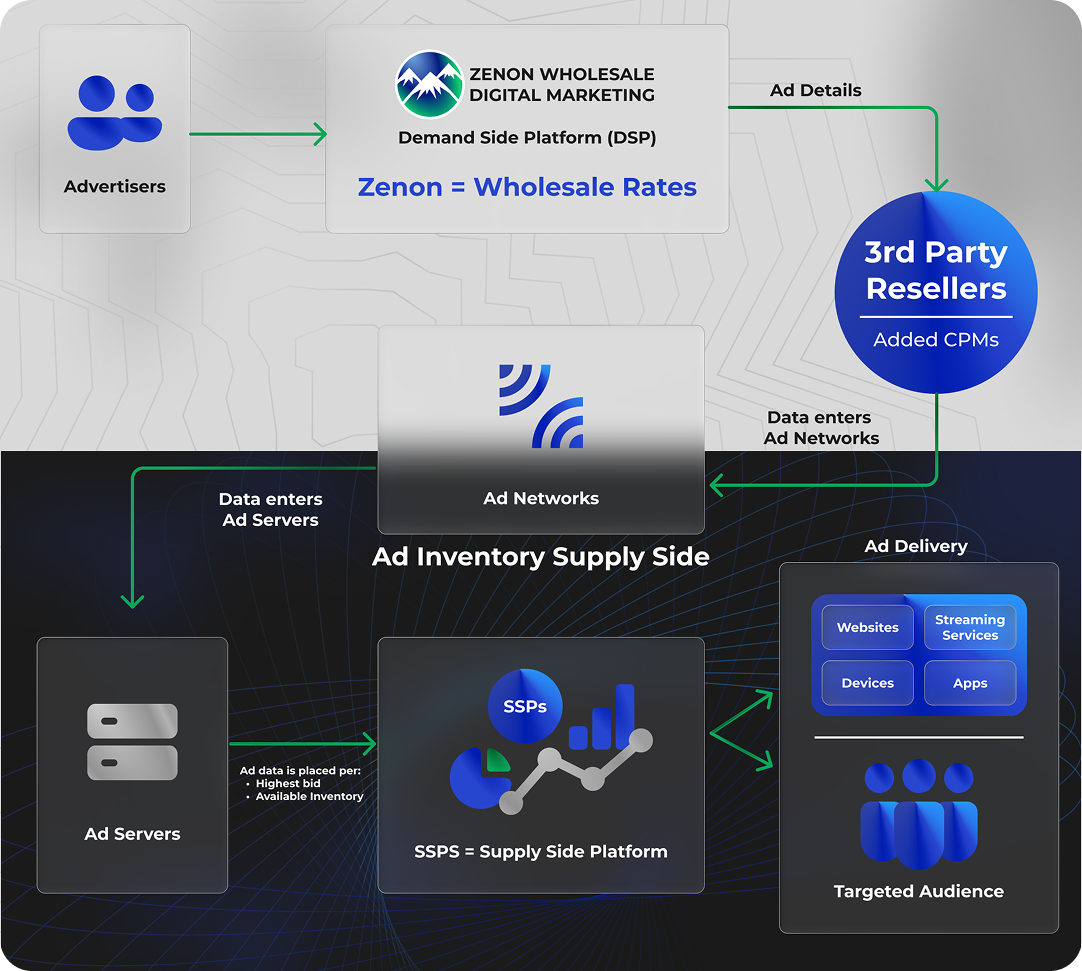
When someone visits a website or app with advertising space, information about that opportunity may be offered through an advertising exchange. Advertisers can compete to show an advert to that visitor, based on factors such as the page content, location, device or permitted audience signals. The process is automated and usually takes place as the page loads.
Several types of platform may be involved:
- Demand-side platforms (DSPs) help advertisers plan, manage and optimise campaigns across advertising exchanges.
- Supply-side platforms (SSPs) help publishers make their advertising space available to buyers.
- Ad exchanges connect buyers and sellers and facilitate the transactions.
- Data and measurement tools help teams understand audiences, manage campaigns and assess performance.
Real-time bidding is a common way to buy programmatic advertising, but it is not the only one. Some inventory is bought through private marketplaces or guaranteed arrangements, where the buyer and publisher agree terms in advance.
What can it be used for?
Programmatic campaigns can support different stages of the customer journey. A business might use display advertising to build awareness, online video to explain a product, or carefully managed retargeting to remind interested visitors about a service. Campaigns can also be planned around context, such as showing an advert alongside relevant content rather than relying solely on information about an individual.
Programmatic tools can make it easier to adjust bids, budgets and creative while a campaign is running. For example, a team may shift spend towards placements that are meeting its objectives, or test different messages with suitable audiences.
Potential benefits
- Efficient buying: Automation can reduce the time needed to manage large numbers of advertising placements.
- Flexible reach: Campaigns can run across a range of publishers, formats and devices.
- More responsive optimisation: Teams can use performance data to make changes during a campaign.
- Detailed reporting: Depending on the platforms and measurement setup, advertisers can review delivery, engagement and outcomes.
- Creative testing: Different formats and messages can be tested to learn what resonates with an audience.
These benefits are not automatic. Results depend on the quality of the campaign plan, the available inventory, the creative, the data and the way success is measured.
Challenges to consider
Programmatic advertising can be complex. Advertisers may work with several platforms, each with its own fees, reporting and settings. Without clear oversight, it can be difficult to understand where a budget has gone or whether an advert appeared in a suitable environment.
Other concerns include ad fraud, low-quality placements, excessive frequency and brand safety. A campaign may also report activity that looks impressive but does not contribute to meaningful outcomes. For example, a high number of impressions does not necessarily mean that people noticed, remembered or acted on an advert.
Privacy and data protection must be considered from the outset. UK organisations should make sure their advertising practices comply with applicable data protection and electronic marketing rules, including the UK GDPR and Privacy and Electronic Communications Regulations (PECR), where relevant. They should use data lawfully, be transparent about its use, and review the practices of advertising partners. Requirements can depend on the technology and the specific circumstances, so specialist legal advice may be appropriate.
How to build a stronger programme
- Set a clear objective. Decide whether the campaign is intended to build awareness, generate leads, encourage sales or achieve another measurable outcome.
- Choose useful measures. Match metrics to the objective. Reach and completed views may suit awareness activity, while qualified enquiries or sales may be more relevant for performance campaigns.
- Know where adverts can appear. Set placement controls, review supply partners and use suitable verification tools to reduce exposure to unsuitable or poor-quality inventory.
- Use audience data responsibly. Prefer data practices that are transparent, proportionate and compliant. Consider contextual targeting as an alternative or complement to audience-based approaches.
- Make creative relevant. Ensure the message, format and landing page work together. Test variations, but keep the brand and core proposition consistent.
- Monitor frequency and performance. Check how often people see an advert and whether the campaign is delivering useful results, not just volume.
- Review costs and reporting. Understand platform fees, agency costs and measurement limitations. Where possible, compare platform reporting with independent analytics and business outcomes.
Programmatic marketing and the changing digital landscape
Digital advertising is evolving as privacy expectations, regulation and technology change. Access to some identifiers and tracking methods may be limited, so advertisers are placing greater emphasis on first-party data collected with appropriate permissions, contextual signals, quality creative and sound measurement.
Automation can help manage campaigns, but it does not replace human judgement. Marketers still need to decide whom they should reach, what they want to say, where their adverts should appear and how success should be judged.
Conclusion
Programmatic digital marketing offers a flexible way to buy and manage digital advertising at scale. Its effectiveness depends on more than automation: clear objectives, relevant creative, careful measurement, suitable inventory and responsible data use all matter. With thoughtful planning and regular review, programmatic advertising can form a useful part of a wider digital marketing strategy.
8 Essential Tips for Effective Programmatic Digital Marketing
- Set clear campaign goals before buying media.
- Use first-party data responsibly and with consent.
- Choose audience segments that match your objectives.
- Set frequency caps to avoid ad fatigue.
- Use brand-safety controls and block unsuitable placements.
- Test creative formats and messages regularly.
- Monitor viewability, conversions and cost per result.
- Review performance and adjust bids and budgets often.
Set clear campaign goals before buying media.
Set clear campaign goals before buying media so every decision supports a defined outcome. Decide whether the campaign is intended to build brand awareness, attract qualified leads or drive sales, then choose suitable channels, audiences and measures of success. Clear goals also make it easier to set a realistic budget, assess performance and optimise the campaign as it runs.
Use first-party data responsibly and with consent.
Use first-party data responsibly and with appropriate consent. Information collected directly from your customers—such as preferences or past purchases—can help make programmatic campaigns more relevant, but people should understand how their data will be used and be able to make informed choices. Collect only what you need, store it securely, respect privacy preferences and ensure your practices comply with applicable UK data protection and marketing rules.
Choose audience segments that match your objectives.
Choose audience segments that match your objectives, rather than targeting the broadest group possible. For brand awareness, you might focus on people with relevant interests or behaviours; for lead generation, prioritise audiences showing stronger intent. Keep segments specific enough to make your message relevant, but large enough to deliver effectively, and review performance regularly to see which groups are contributing to your goals.
Set frequency caps to avoid ad fatigue.
Set frequency caps to limit how often the same person sees your advert within a set period. Repeated exposure can cause ad fatigue, making people less likely to notice or engage with your message—and potentially more likely to find it irritating. Choose a cap that suits your campaign and audience, then review reach, engagement and conversions to see whether it needs adjusting. Keep creative fresh, too, so that continued exposure feels relevant rather than repetitive.
Use brand-safety controls and block unsuitable placements.
Use brand-safety controls to help ensure your adverts appear in suitable environments and reflect your organisation’s values. Set clear rules for the types of content and websites you want to avoid, and use placement blocklists to exclude unsuitable or low-quality inventory. Review these settings regularly, as websites and content can change, and check campaign reports to identify placements that may need to be blocked. This helps protect your brand’s reputation while keeping your advertising focused on appropriate audiences.
Test creative formats and messages regularly.
Test creative formats and messages regularly to discover what captures your audience’s attention and encourages them to act. Experiment with different images, video lengths, headlines and calls to action, while changing one element at a time where possible so you can understand what is driving the results. Review performance against your campaign goals, then use those insights to refine future creative. Regular testing helps keep adverts relevant and prevents campaigns from relying on assumptions or becoming stale.
Monitor viewability, conversions and cost per result.
Monitor viewability, conversions and cost per result to understand whether your programmatic campaigns are delivering real value. Viewability shows whether adverts had a reasonable chance of being seen, while conversion tracking reveals whether they led to useful actions, such as enquiries or purchases. Comparing these results with your cost per result helps identify which placements and creative are working best, so you can adjust your budget and improve performance.
Review performance and adjust bids and budgets often.
Review campaign performance regularly and adjust bids and budgets in response to what the data shows. Increase investment in placements, audiences or creative that are meeting your objectives, and reduce spend where results are weak or costs are too high. Make changes thoughtfully, allowing enough time and data to identify genuine trends rather than reacting to short-term fluctuations.
Leave a Reply